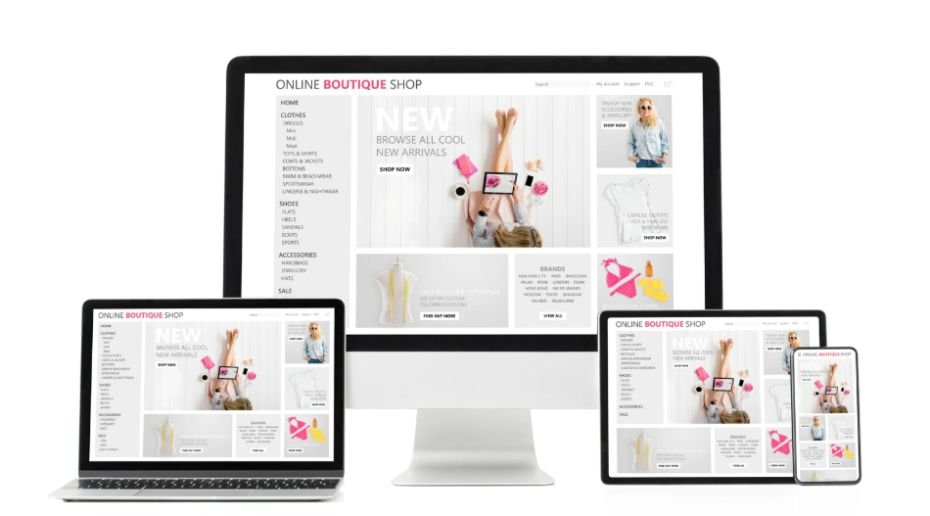


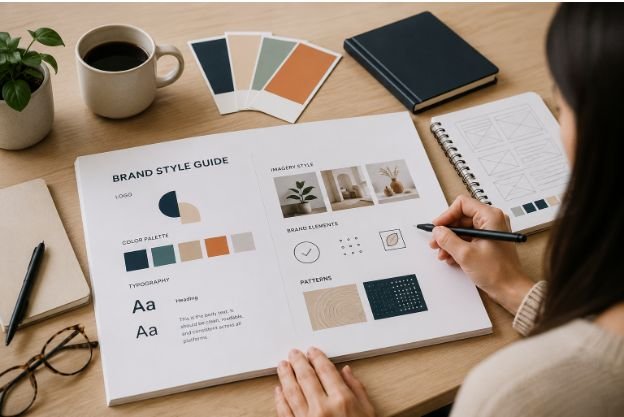
Every memorable brand has something that feels familiar. Maybe it is a certain color combination, a specific writing style, or the way every visual instantly feels connected. These details rarely happen by accident. Behind strong branding is a clear system that helps everyone make consistent decisions.
A brand style guide works like an operating manual for your business identity. It keeps your visuals, messaging, and customer interactions aligned, whether someone visits your website, reads an email, views your social content, or sees a printed marketing piece. Without clear guidelines, brands slowly become inconsistent as more people contribute ideas, designs, and content.
What Is a Brand Style Guide?

A brand style guide is a central document that explains how a brand should look, sound, and communicate. It gives designers, writers, marketers, employees, and external partners clear instructions for representing the brand correctly.
Instead of making separate decisions every time a new project begins, teams can follow established brand guidelines. This helps protect brand identity and creates a more recognizable customer experience.
A strong company style guide usually includes visual identity rules, brand voice guidelines, messaging standards, and practical examples. It removes confusion and helps every piece of communication feel connected.
Start With Your Brand Foundation
Before choosing fonts or colors, define the purpose behind your business. Visual choices become stronger when they connect with your larger story.
Your brand foundation should include your mission, vision, values, and audience details. The mission explains why your company exists, while the vision describes the future you want to create.
Core values help guide decisions and show what your business represents. Most brands focus on a few meaningful values instead of creating a long list that becomes difficult to remember.
Understanding your target audience is equally important. Think about who they are, what they care about, their challenges, and how your brand helps them. A clear audience profile makes your communication strategy more focused.
Create Clear Logo Usage Guidelines
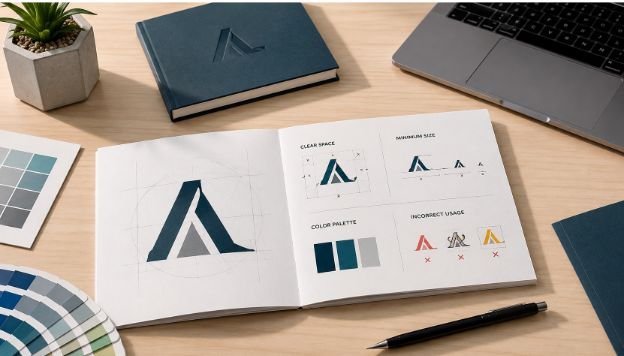
Your logo is often the first visual element people associate with your brand. Clear logo rules prevent incorrect usage that can weaken recognition. When using Beginner Friendly Logo Design Tools for Brands, establishing simple brand guidelines from the start helps maintain consistency across websites, social media, business cards, packaging, and marketing materials.
Defining proper spacing, approved colors, minimum sizes, and acceptable file formats ensures your logo remains recognizable and professional wherever it appears, strengthening your brand identity over time.
Your visual identity guide should include approved logo versions for different situations. This may include a primary logo, secondary layouts, simplified icons, and versions designed for dark or light backgrounds.
Logo guidelines should explain:
- Required spacing around the logo
- Minimum size requirements
- Incorrect uses like stretching, changing colors, or adding effects
These small details protect the original design and ensure your logo appears professionally across websites, presentations, packaging, and digital assets.
Build a Consistent Color Palette
Colors create emotional connections and help people identify brands quickly. However, simply choosing colors is not enough. A professional brand style guide should provide exact specifications.
Include primary colors used most often and secondary colors for supporting designs. Add accurate HEX and RGB codes for digital platforms, along with CMYK or Pantone details for printed materials.
Accessibility should also be considered. Good color contrast improves readability and creates a better experience for more users. Thoughtful design choices help branding stay attractive and functional.
Define Typography and Visual Elements
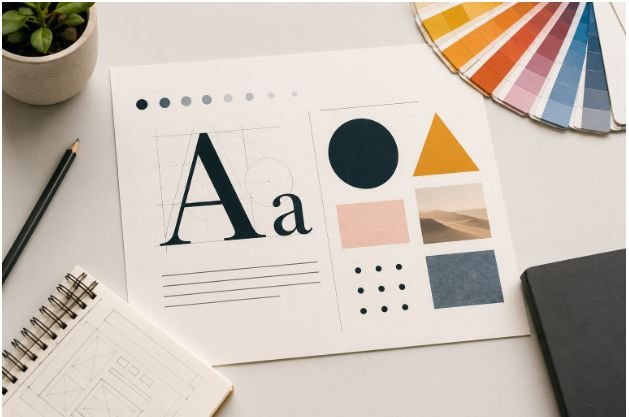
Typography influences how people experience your message before they even process the words. A playful font creates a different feeling than a clean professional typeface.
Your typography rules should define fonts for headings, body content, captions, and other communication formats. Include details like font sizes, spacing, and usage examples.
Imagery guidelines are another important part of brand identity guidelines. Define the photography style, illustration approach, and graphic elements that match your personality.
For example, one brand may prefer natural lifestyle photography with warm lighting, while another may rely on minimal product images and structured layouts. Clear direction keeps every visual choice intentional.
Include Modern Brand Guidelines for Digital Teams
Today, brands create content across more platforms than ever. Websites, apps, newsletters, social channels, and digital campaigns all need the same level of consistency.
Modern branding guidelines often include rules for design systems, templates, and digital communication. Many teams create shared resources that include approved presentations, email formats, and social media layouts.
Generative AI has also changed how companies approach content creation. Adding AI guidelines can help teams review AI-generated content, maintain accuracy, and protect the authentic brand personality.
The goal is not to limit creativity. Strong guidelines create a structure where creativity can happen without losing the original identity.
Frequently Asked Questions: How to Create a Brand Style Guide That Keeps Your Brand Consistent
What should a brand style guide include?
A brand style guide should include your mission, values, logo rules, color palette, typography, imagery style, brand voice, messaging guidelines, and content standards. It should provide enough detail for anyone creating brand materials.
Why does every business need a brand style guide?
A brand style guide helps businesses maintain consistency across different platforms and teams. It improves recognition, builds customer trust, and makes communication more organized.
How often should you update brand guidelines?
Brand guidelines should be reviewed whenever your business changes significantly. Updates may be needed when refreshing visuals, expanding services, changing messaging, or adopting new platforms.
Is a brand style guide only for large companies?
No. Small businesses and startups also benefit from having clear branding guidelines. Creating consistency early helps build a stronger and more professional identity as the company grows.
Why Consistent Brands Become Easier to Recognize
Building a recognizable brand takes more than a good logo or attractive design. It comes from repeated experiences that feel connected over time. A thoughtful brand style guide creates the foundation for those experiences by helping every person involved understand how the brand should appear and communicate.
The strongest brands are usually not the ones changing direction constantly. They are the ones people remember because every interaction feels familiar, intentional, and trustworthy.